Food & culture
What a Moroccan Cooking Class Is Really Like
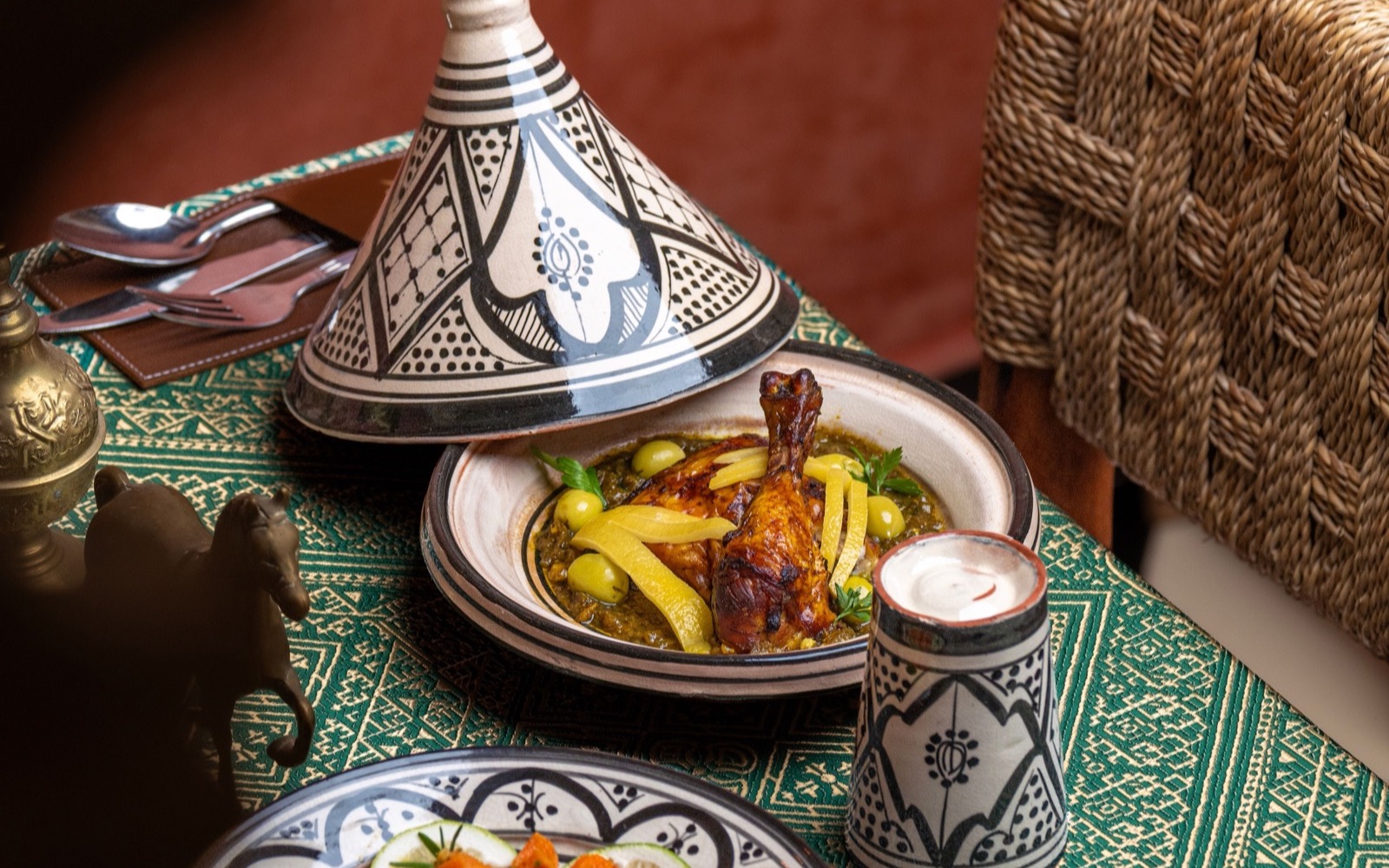
The cooking class is the most over-promised experience in Morocco. The photos are always the same: a courtyard, a tagine lid lifting off, somebody in a clean apron looking delighted. What nobody tells you is that a good class is barely about cooking at all, and that the difference between a great morning and a waste of one comes down to a single question: do you go to the market first? Here is what actually happens in a Moroccan cooking class in Essaouira, what you genuinely take home, and how to tell whether it deserves half a day of your trip.
1. What a Moroccan cooking class actually is
Set your expectations properly and you will enjoy it far more. This is not a chef's course: nobody teaches you knife skills, and you will not leave able to reproduce a restaurant plate. A Moroccan cooking class is three to four hours split into two unequal halves. Sourcing, which is fast and loud and where most of the learning hides, and cooking, which is slow and mostly waiting.
The classes worth doing hand you a basket and take you out. The ones worth skipping have everything pre-chopped in little bowls when you arrive, which turns it into an assembly demonstration. You will still eat well, you just will not learn anything a video could not have taught you.
Expect to cook one dish, maybe two. Moroccan home cooking runs on long, low heat, and there is no way to compress a tagine into twenty minutes. The slowness is the technique, not a scheduling failure.
2. The souk run, and why it is half the class
Essaouira makes this part unusually good: the medina is small enough to cross on foot in fifteen minutes and the port is right there. In a bigger city the market trip is a production, here it is a stroll.
What you are actually learning in the souk is not haggling. Haggling is the thing visitors fixate on and it matters least. You are learning to read ingredients:
- Spice stalls sell ras el hanout, and every stall's blend differs. It is a house mixture, not a fixed recipe, which is why the same dish tastes different street to street. Smell before you buy.
- Preserved lemons sit in jars in their own cloudy brine. The rind is the part you use, the pulp usually gets discarded, and this is the single ingredient most responsible for food tasting Moroccan rather than generically North African.
- Olives are sold loose by the scoop in a dozen cures, from sharp and green to soft and black. Ask to taste, vendors expect it.
- Essaouira sits in argan country, and the region is the origin of the oil rather than a reseller of it. Culinary argan oil is toasted and nutty and completely different from the cosmetic kind. Do not cook with it, finish with it.
- The port lands fish daily, so what is good depends on what came in that morning. A class that tells you the menu a week ahead is not shopping, it is stocking.
Half an hour of this and you see a different medina for the rest of the trip. That is the real souvenir.
3. Tagine day versus couscous day
Almost every class in Morocco is built on one of these two, and they are far less alike than outsiders assume. Which one you get changes the shape of the morning.
| Tagine | Couscous | |
|---|---|---|
| What it is | Both the conical clay pot and the dish cooked in it | Steamed semolina, served under a stew of meat and vegetables |
| Hands-on time | Short: build it, then leave it alone | Long: the grain is steamed, raked and rested repeatedly |
| Total time | Around 90 minutes of cooking, mostly unattended | Two hours plus, and you are involved for most of it |
| What it teaches | Layering, low heat, patience | Texture and repetition, the most technical thing in the cuisine |
| Best for | A first class, and anyone who wants to actually reproduce it | People who cook already and want the harder skill |
Couscous is traditionally the Friday dish in Moroccan homes, eaten after midday prayers, and in many households it is still the one meal of the week everybody sits down for together. If you are offered a couscous class, take it, but know it is the more demanding of the two.
The tagine, if that is your day, goes together in an order that matters more than any individual ingredient:
- Oil and sliced onion go in first, flat across the base of the pot. This is the layer that stops everything above it from catching.
- Meat sits directly on the onion, in the centre, so it cooks in steam rather than on hot clay.
- Vegetables are stacked around and over the meat in a cone, hardest at the bottom, softest on top. The shape is not decorative, it is how the heat distributes.
- Spices, garlic and preserved lemon go over the pile, not stirred through it.
- A small amount of water goes in at the edge. Far less than instinct says. The vegetables release most of the liquid themselves.
- The lid goes on and stays on. The cone catches steam, condenses it and returns it to the dish, which is the entire point of the shape.
- Low heat, no stirring, no lifting the lid to check. Season at the end, once the liquid has reduced and you can taste what you actually have.
4. What you actually take home
People expect to come home with recipes. What you come home with is four habits, and they are worth more.
Layering instead of stirring. Most Western home cooking browns things in sequence in a pan. Moroccan slow cooking builds a structure and then leaves it intact, and once you understand why, you can do it in any heavy pot with a lid. You do not need to buy a tagine.
Salting late. With preserved lemon, olives and a spice blend all carrying salt of their own, seasoning at the start is how a dish ends up inedible.
Using far less liquid than feels safe. This is the most common mistake at home, and the reason a tagine turns into a soup.
Treating a spice blend as a starting point. Once you know ras el hanout is a house mixture, you stop hunting for the correct one and start adjusting yours.
Not sure whether to spend a morning on this?
Tell us what you are into and how long you are here, and we will tell you honestly whether a cooking class is the right use of your time or whether you would get more out of a day on the water. We would rather you enjoyed the trip than booked the extra.
Ask us on WhatsApp See the packages5. Who it is for, and who should skip it
It is genuinely good for solo travellers. Cooking with strangers is one of the few activities where being on your own is an advantage rather than something to manage, and you eat lunch with people whose names you now know. It also rescues a windless day when the water is not delivering.
Skip it if you are here for two nights and have not seen the ramparts yet, because it eats your only free morning. Skip it if you want to eat well rather than to cook, and spend the same money in the port and the food stalls instead. And skip it if you are a confident cook after advanced technique, unless you can get a couscous class specifically.
6. How ours works, and what it costs
We run Moroccan cooking classes as one of the activities inside the Cooking Package, not as a standalone ticket. One activity per day: two nights means two activities, three nights means three. Accommodation is included, along with Wi-Fi, rooftop terrace access and the fully equipped shared kitchen.
| Cooking Package | 2 nights | 3 nights |
|---|---|---|
| Solo (dorm bed, price per person) | 920 MAD | 1380 MAD |
| Duo (private room, total for 2 people) | 1800 MAD | 2700 MAD |
Taxes are included. Packages are arranged over WhatsApp rather than through a checkout, because the dates and the activity mix need a short conversation first. Once paid, the booking is confirmed, and packs are non-refundable.
If you want the class without the package, message us and ask. We do not publish a standalone price, and the honest answer depends on the day and the group size.
7. Practicalities worth knowing
Time of day matters. Anything involving the market wants the morning, when the fish is fresh and the medina is not yet full, so a cooking day commits your morning and lands lunch in the early afternoon. Check-in is from 14:00 and checkout is 11:30, so a class on your last day does not work: plan it for the night before.
Come hungry, and do not book a restaurant that evening. You will have cooked and eaten a full meal in the middle of the day, and Moroccan portions are not restrained.
The shared kitchen here is fully equipped, which matters more than it sounds: the day after, while it is still fresh, is when you should try the dish again yourself. The ingredients are a five minute walk away and cost almost nothing. That second attempt is where it sticks.
And for the low-effort version of the same idea, tea time on the rooftop is free every day at 18:00. Mint tea, poured from height on purpose, because the fall aerates it and builds the foam on top. That is a technique too.
Frequently asked questions
How long does a Moroccan cooking class take?
Plan for three to four hours in total. A class that includes a trip to the market adds roughly half an hour of shopping at the start, and the cooking itself is mostly slow, unattended time rather than constant activity. Because the market part works best in the morning, a cooking class usually takes up a morning and finishes with everyone eating together in the early afternoon.
Do you go to the market as part of the class?
The market run is what separates a real cooking class from a demonstration, and in Essaouira it is easy to include because the medina is small enough to cross on foot in about fifteen minutes and the fishing port is right beside it. If it matters to you, confirm it when you book, since not every class in Morocco includes it and some arrive with the ingredients already prepared.
What dish will I cook, tagine or couscous?
Most classes in Morocco are built around one or the other. A tagine is the usual choice for a first class: you build it in layers, then leave it alone on low heat for around ninety minutes. Couscous is the harder skill, because the semolina is steamed, raked and rested several times, and it keeps you working for two hours or more. Couscous is traditionally the Friday dish in Moroccan homes.
Can a cooking class be vegetarian or accommodate allergies?
Yes. Vegetable tagine is a genuine dish in Moroccan cooking rather than a substitution, so vegetarians are well served, and most dietary needs can be worked around. The important thing is to say so when you book rather than on the day, because the shopping happens before the class starts and the menu is decided around what is available at the market that morning.
How much does a cooking class at Chill Art Hostel cost?
We include Moroccan cooking classes in our Cooking Package rather than selling them as a standalone ticket. The package runs on one activity per day, so two nights means two activities and three nights means three, and it includes accommodation, Wi-Fi, rooftop terrace access and use of the fully equipped shared kitchen. Prices are 920 MAD for two nights or 1380 MAD for three nights solo in a dorm bed, and 1800 MAD for two nights or 2700 MAD for three nights for two people sharing a private room, taxes included.
How do I book the Cooking Package?
Packages are arranged over WhatsApp on +212 605 815 025 rather than through an online checkout, because dates and the mix of activities need a short conversation first. We confirm availability, agree which activity happens on which day, and then send a payment link. Once paid, the booking is confirmed and packages are non-refundable. If you want a bed without a package, live availability for all eight rooms is on our own booking page.
Cook it, then come back and cook it again
Live availability for our eight rooms on our own booking page, a fully equipped shared kitchen five minutes from the spice souk, and someone on WhatsApp to help you plan the week around it.
See availability Ask on WhatsApp